
Peptide merchants
Stop losing sales to declines
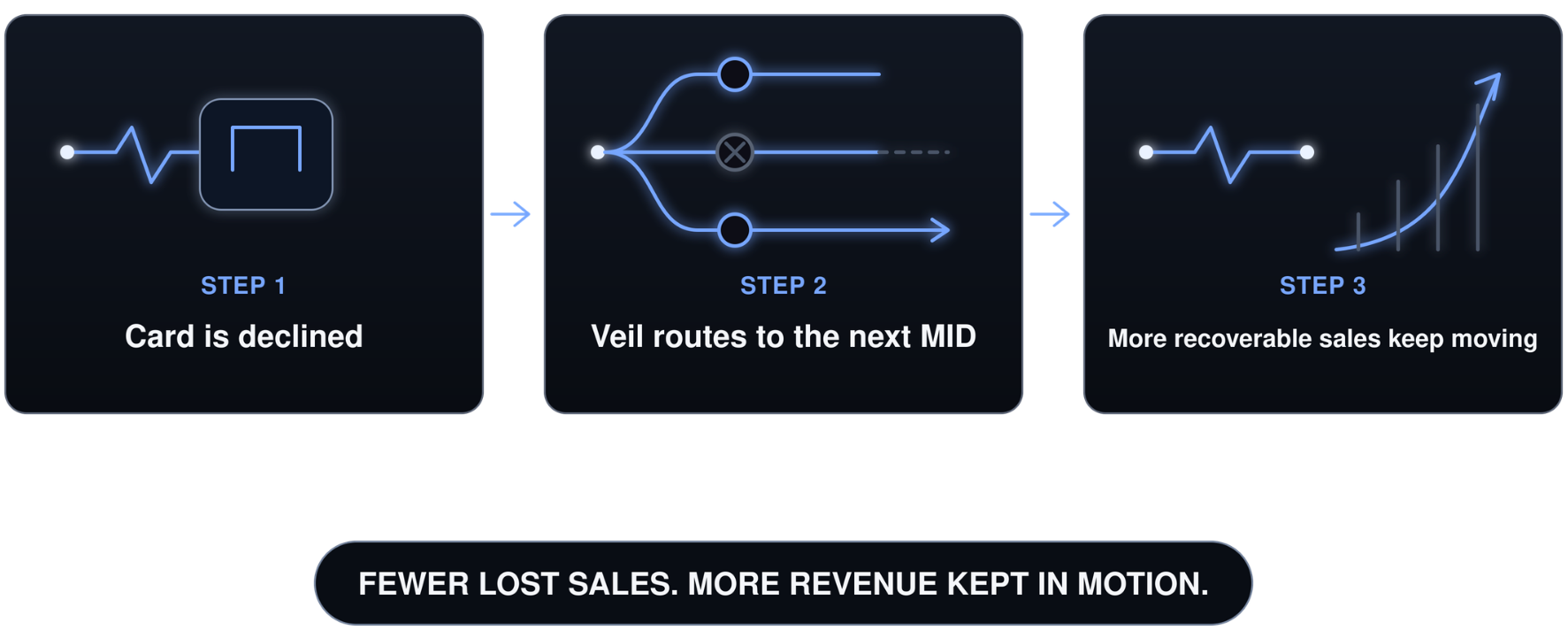
Multiple MIDs behind one gateway. When one route declines a card, the next one takes it. Peptide merchants processing on Veil Pay recover transactions a single-MID setup writes off.
[1] hour
Pre-qualification
[2] days
Full decision
[2] days
Live and processing, after approval
Why you're here
Three things kill peptide merchants. You've probably had all three

You can't get approved.
Most acquirers won't look at the category. The ones who will take six weeks to say no. You've filled in the same application four times and heard nothing back twice.

Approval doesn't hold.
An account gets underwritten, volume builds, a risk review lands. Settlement stops. A reserve appears that nobody mentioned. Thirty days later you're rebuilding your stack from scratch with your customers' cards on file stranded on a dead gateway.

The transactions that do go through are a fraction of what should.
This is the one merchants don't measure and it costs the most. Issuers decline the category harder than almost anything else in card-not-present. On a single MID, every decline is a lost sale. At scale, that's a bigger number than your chargebacks and your fees combined.
Single MID

Declines written off
Cascaded

Retried on the next route
The first two problems are about survival. The third is about money you're already leaving on the table today.
How it works
One integration. Multiple MIDs underneath
You connect once. Behind that connection sits every acquiring route we hold that covers your category.
Your checkout
Veil Pay gateway
One integration · your routing rules
MID 01
Routing
MID 02
Under review
MID 03
Routing
A soft decline on one MID is retried on another — same customer, same session.

Multiple MIDs, one integration
You build against one gateway, one API, one dashboard. We hold the acquiring relationships, the onboarding, and the maintenance behind it. Adding a MID later doesn't mean touching your code.
Routing you control
Volume splits across your MIDs on rules you set — by ticket size, by geography, by card type, by percentage. Keep a route inside its volume cap. Keep a new route seasoning. Push your best-performing traffic where it converts.
Cascading on decline
A soft decline on one MID is automatically retried on another. Same customer, same session, no second checkout. Most merchants in this category see the difference in the first week.
Independent routes
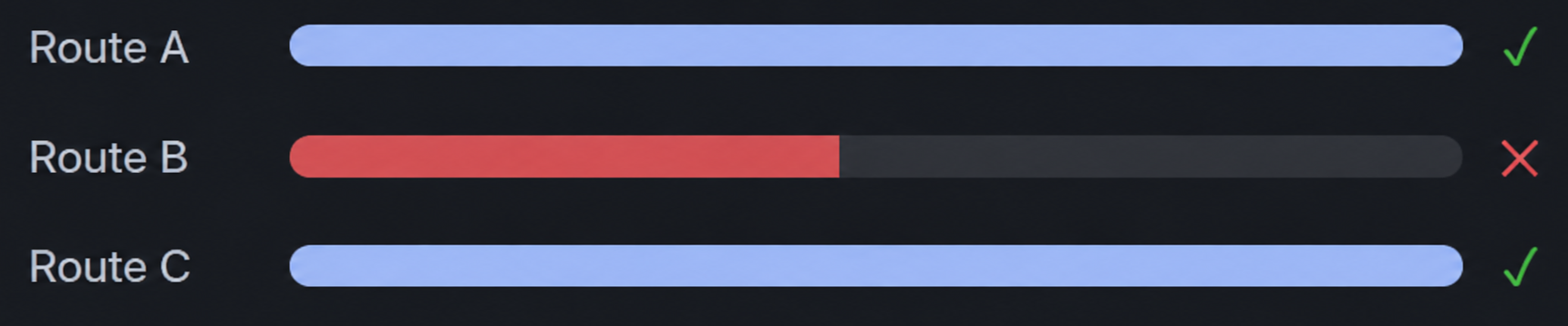
The MIDs don't share an upstream dependency. A review, a cap, or an exit on one route doesn't reach the others. Volume rebalances and your checkout stays up.
One settlement view
Every MID reports into a single dashboard. Transactions, settlements, reserves, chargebacks, and reason codes across the whole book — not four logins and a spreadsheet
When a route goes down
Nothing about your business changes
Routes get reviewed. Caps get hit. Acquirers change appetite and sometimes exit a category with thirty days' notice. This is normal in your vertical and planning around it is the job.

Single MID

Revenue
$0
Any of those events is a full stop — checkout down, revenue at zero, and a rebuild that takes weeks you don't have.
On Veil Pay
Revenue
Uninterrupted
Volume rebalances to your remaining routes. Your checkout doesn't change. Your integration doesn't change. Your customers don't see anything. You get a notification and we start the replacement route in parallel.
The point of multiple MIDs isn't that nothing ever goes wrong. It's that when something does, it isn't your whole business.
Approvals
Fast because the hard part is already done
Most of the time a peptide merchant waits isn't underwriting. It's an acquirer deciding whether it will consider the category at all — and then declining. Six weeks for a no.
We've already had that conversation. Our routes carry approved-category schedules we hold in writing. When you apply, the question isn't whether anyone will look at you. It's whether your file clears underwriting.
[2] hours
Pre-qualification
We check your category and markets against the schedules on our live routes and tell you whether there's a fit. If there isn't, you hear it the same day and you've lost a day, not six weeks.
Day 1–2
Documents
One consolidated request. We don't drip-feed and we don't ask twice.
[1] business days
Decision
Approved with terms, approved with conditions, or declined. Where we're able to give you the reason, we do.
[1] business days
Live
Hosted checkout or API. Test transactions on your own account before any live volume moves.
The questions you'd ask on a call
Straight answers

How many MIDs will I get?
Depends on your volume, your ratios, and your category. Most merchants start on one or two and add routes as history builds. You're not paying per MID — you're paying for the gateway and the volume across it.
Will I have a rolling reserve?
Almost certainly. Reserves are standard in this category and any processor telling you otherwise is either mispricing your risk or planning to impose one later without telling you. What matters is that the rate, the hold period, and the release schedule are in your agreement before you sign, and that held amounts and release dates sit in your dashboard rather than being something you have to chase.
Do you guarantee approval?
No, and nobody credible does. Approval depends on your file and on the acquiring partner's own risk decision. What we commit to is a fast answer either way, and telling you on day one if we already know no route covers you.
Can I keep my current processor?
Yes, and we'd usually suggest it. Concentration is the risk that brought you here. Splitting volume across independent processors means one review doesn't take your revenue to zero.
What happens if my chargeback ratio climbs?
You hear from us before you breach a threshold, not after. Rising ratios are usually a descriptor, fulfilment, or product-page problem with a fix, and the fix works when it happens early. Left alone it ends in a scheme monitoring programme with fines attached — and that follows you to your next processor.
Who holds my money?
Settlement sits with the acquiring partner and the licensed institutions in the flow.
How long until I'm live?
[2] business days from approval for hosted checkout. Longer if you're building against the API, and that's on your engineering timeline rather than ours.

Apply now
Around ten minutes if your last six months of processing statements are to hand. We come back within 2 business days with a route assessment or a straight decline.
All applications are subject to know-your-business checks, underwriting, and acquiring partner approval.
veilpay.co
veilpay.co